سلام و مرحبا


أقوم المسالك، مدوّنتكم لما وراء الأخبار السّياسيّة و كلّ ما يهمّ الشّأن العام.

Friday, November 30, 2012

The world needs more Extremism


“To vegetate on in cowardly dependence on physicians and medicaments after the meaning of life, the right to life, has been lost ought to entail the profound contempt of society.”[1] A very “extreme” statement by Nietzsche when one considers that on this ground he bases his “moral code for physicians”. In fact this view on physically disadvantaged people earned him some bitter criticism as a theorist for some Nazi doctrines. 
Nevertheless, I think one ought to look beyond the shocking aspect of such an extreme statement. One needs to suppose that this radical view on handicapped people be taken to its “real” radical implication. The statement above ought to be explored to its real depth:
People with severe physical disadvantages continue to suffer discrimination in most parts of the world. Let us take the example of a person which lost her arm: The technology necessary for the replacement with an electronic arm is present. Nevertheless governments and institutions are not willing to invest the money necessary for the development of this technology and making it available.
 If we apply the Nietzschian extreme principle then the only normal and “worthy of life”  is to provide all people with no arms with an electronic one. If one says that this would cost too much and therefore is impossible then we would remind them that we are discussion an “extreme” radical solution. Cutting military spending to overcome physical bodily handicaps would be nothing but a normal thing, with these “extreme” norms. 
But the world is not like this. Indeed, the most extreme people are usually the “bad guys”. Politically, parties with anti-diversity agendas tend to be prepared to be radical and decided in their opinions and decisions. On the other hand, parties calling for the opposite values are usually less radical and more dispersed. An example of this is the case of the minarets in Switzerland. Those opposed to minarets in Switzerland wanted nothing shorter than total abolishment; those supporting it were ready to compromise on the height and other details. The resulting triumph of the parties against minarets is due partially to their extreme and uncompromising position. There were only 4 minarets in Switzerland[2]! Yet that did not play in favor of the progressive camp as they were ready to compromise on the ideal of freedom of worship.
The “good guys”, those willing to adhere to a world community of free human beings, are never radical enough to counter weigh their opponents.
 How can a world of extremists be a better one? Easy, imagine a world where freedom and human rights were nonnegotiable. Let us imagine a world where people would not compromise on any of their or others liberties.
Viewed under this light, being radical could indeed be considered a rather necessary thing.  
LeBounce


[1] “Twilight of the Idols” , Friedrich Nietzsche  Page 88, R.J Hollingdale 1968

مسودّة الدّستور المصري Egyptian constitution draft 11/29/2012

نبارك للشّعب المصريّ الإنتهاء من مسوّدة أوّل دستور مؤسّس لمصر الثّورة و العدالة. و إذ نتوسّم في الرّئيس مرسي سرعة 
طرحه للإستفتاء تنمنّى إنتهاء حالة الإحتقان السّياسية الرّاهنة.  
لمزيد من التّفاصيل حول الأزمة الرّهنة بمصر راجعوا قرّائنا الأعزّاء مقالنا (بالإنكريزيّة) http://www.a9wam.com/2012/11/egypts-revolution-moment-of-truth.html
Egypt's Constitution

Wednesday, November 28, 2012

Egypt’s revolution: Moment of Truth!

http://www.reuters.com/article/slideshow/idUSBRE8AM0DO20121128#a=1


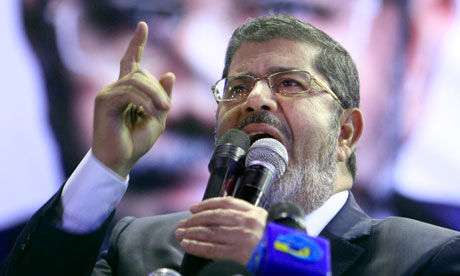
Egypt's revolution has been tested and challenged since the first day of its "success". A heavy price in blood, turmoil and economic decline continued to be paid until the first civilian-president-elect Mohamed Morsi ousted the military from power. Civilian assumption of the government has been a chief revolutionary demand. Thus little criticism could be heard when the president dismissed the chief of the then ruling military council general Tantawi and some other chef military generals.
After this historical breakthrough, Egypt continued on a shaky path towards enacting a new constitution and forming new republican and democratic institutions. In part this was due to anti-revolutionary forces and their continued fight against change. Not all the blame falls on the partisans of Mubarak's deposed regime though. After historical free elections, the parliament was dissolved by court rulings. The constitutional assembly (responsible for drafting the constitution) kept being under the same threat as well. This insecurity, coupled with growing political divide weakened the democratic transition process.
http://www.reuters.com/article/slideshow/idUSBRE8AM0DO20121128#a=11
Under these severe conditions, Morsi issued his most controversial constitutional decree to date. The document is titled “concerning the protection of the revolution”[1]. It provides that Trials for crimes against the protesters of Tahrir square are to be repeated under a new chief Attorney general[2]. The former prosecutor, which was appointed by Mubarak, is blamed for providing only weak evidence against key figures in the political and security apparatus of the old regime. The inefficiency of evidence has led to alleviated rulings and to wide disdain from revolutionary fractions and forces.
But the constitutional decree raised far more controversy because of its clauses that grants presidential decrees, the legislative branch and the constitutional assembly immunity against dissolution threats[3]. The courts will no longer be able to rule on dissolving any of these elected entities. This opens the door for an interesting possibility: For the already dismantled legislature can possibly be reinstituted. Another effect is that the decision relieves the constitutional assembly from the constant threats it is facing by courts that are reviewing cases that argue its unconstitutionality.
Both the legislature and the assembly are direct products of the first free and internationally approved elections in Egypt’s history. Moreover, both reflect the confortable majorities that Islamists, both the Justice and development party and the Nour party, enjoyed in these elections. Many political and religious players have withdrawn from the constitutional assembly judging it was “dominated by Islamists”[4]. Many religious and political groups have objected to its composition and walked out of the committee short of the completion of the constitution’s draft. Along with former contenders that lost the presidential race to Morsi, they lead the wave of protest against the decrees enacted by the president.
The unrest continues to rage and has claimed at least 2 lives so far and violence is not yet contained. The opposition claims that the president-elect has assumed dictatorial powers by making his decisions immune to the courts checks. Morsi’s adversaries have contained their rivalries in the hopes of compelling the president to withdraw. It is notable that Chafik[5], a former Mubarak prime minister, has joined the quire and affirms that “the will of the people” will not be defeated. The polarization is acute in the street. The decision by Islamist parties to delay support demonstration have eased some fears. Only to be replaced by angst regarding their announced Saturday protests where they will be in direct contact with the opposition sit inners in Tahrir square.
Throughout my writing of the above words, events kept pounding and evolving. The president has reinforced the temporary and limited nature of his decree. More importantly he has affirmed that he will not back away from protecting “legal and elected entities”. The president of the constitutional committee (assembly) has affirmed that Thursday will be a “historical moment” and that the draft of the constitution will be complete[6]!
Fundamentally, the real battle is still between the revolution, the change it entitles, and the reactionary forces of the Mubarak dictatorship era.  Many of the fractions that participated in the revolution are lured by the reactionaries into believing that the decree and Islamists are a common enemy worth compromising for. This explains the astonishing alignment of radical adversaries behind the banner of opposition and protest of the decrees. This “tactical” alliance between some revolutionary fractions and reactionary pro-Mubarak ones might be interpreted as good willing but a rushed gesture. Nevertheless, to allow for the reactionaries to regain credibility and attempt to topple the revolution as a whole is not a tactical mistake but it is a strategic one.
The democratic transition faces serious risks in case the elected constitutional entities continue to be challenged and prevented from completing constitutional tasks. The state of insecurity and instability threatens a reversion to dictatorship that many global powers and the Mubarak regime remnants are ready to invest in. 

Given the current conditions, the constitutional decrees of the first democratically elected president of Egypt should be supported. Meanwhile a close eye should be kept at the speed at which the constitution and the legislature are formed and their powers restored.  


[1] Integral text concerning the re-trial in case of newly found evidence for Mubarak era revolution crimes https://www.facebook.com/media/set/?set=a.435663766489546.104259.377633175625939&type=3

Wednesday, November 14, 2012

Dining hall employee, the Chronicles 1: Of potatoes, black outcasts and knives


Today I had to cut potatoes, for 2 hours. It is amazing how the feeling of time and the entire feeling of consciousnesses is irreparably altered during 2 hours of potatoes. In fact one gets the rare chance to approach the realm of eternity and infinity: In short, 2 hours feel like forever, literally.
Regardless, there is some benefits to being a kitchen employee cutting potatoes. One gets to meditate! For after 15 min the brain undergoes this formidable operation of separating between the auto mode (cutting potatoes) and the hyper thoughtful mode. Also one get to contemplate the "human condition" in different aspects that are all too rare in an off-work situation.
It is amazing to consider the sheer number of people who can/do supervise, guide and plainly boss me around through the seemingly mechanical potato cutting. In fact one gets bossed around so much that it almost bruises even the healthiest and toughest egos!
A conversation that I had with a supervisor about potatoes is, in tern, worthy of contemplation:
-Supervisor:" When you find the black ones, THROW THEM AWAY!" then slams a potato in bin.
-me:" That is racist" supervisor looks up at me, realizes I have "color"
-Supervisor:"That is true actually..."
Only my breaking into laughter liberated my nice fellow supervisor from his agony.
D Hall, Gotta love it.
Lebounce
(all opinions, facts and characters presented in the previous text are purely the result of the authors imagination. They have no factual or real implication or source. That said, I love Dhall and I do wanna keep my job: skidmore dining hall is clean, so far racist free and delicious food is its product)